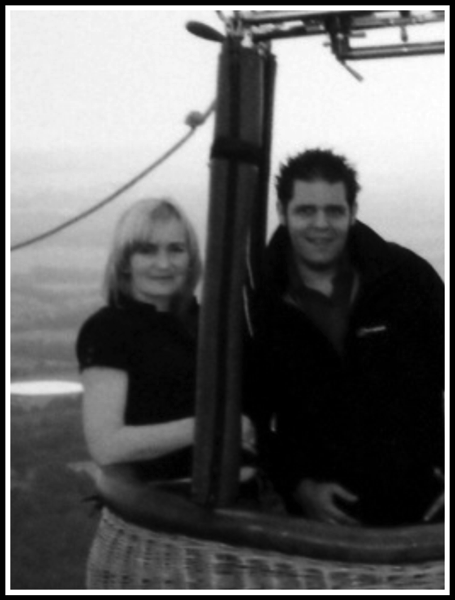
Yay…..It’s Our 11th Wedding anniversary!!
Hi all…..Today is a really long post as it’s a special day for Sarah & i. I really hope you read through to the end and be blessed!
Ephesians 5:25-27 The Voice (VOICE)
Husbands, you must love your wives so deeply, purely, and sacrificially that we can understand it only when we compare it to the love the Anointed One has for His bride, the church. We know He gave Himself up completely to make her His own, washing her clean of all her impurity with water and the powerful presence of His word. He has given Himself so that He can present the church as His radiant bride, unstained, unwrinkled, and unblemished—completely free from all impurity—holy and innocent before Him.
My Thoughts…
Each time our wedding anniversary comes round, i can’t believe how much our marriage has grown more and more fruitful. Our love keeps blossoming through every season and i thank God for Sarah who is not only my best friend, but my amazing wife! 🙂
I thank God for sustaining our marriage in Purity and Truth.
I thank God for not leaving us alone to figure out what to do, but for giving us, teaching, correction, training and a perfect Holy example to follow through the Holy Spirit…to reflect the personal and intimate union between Christ and His Church. The mystery of marriage is its reflection of the oneness of Christ, the Husband, and His Church, the Bride of Christ.
1 Corinthians 13:4-8 Amplified Bible
Love endures with patience and serenity, love is kind and thoughtful, and is not jealous or envious; love does not brag and is not proud or arrogant. It is not rude; it is not self-seeking, it is not provoked [nor overly sensitive and easily angered]; it does not take into account a wrong endured. It does not rejoice at injustice, but rejoices with the truth [when right and truth prevail]. Love bears all things [regardless of what comes], believes all things [looking for the best in each one], hopes all things [remaining steadfast during difficult times], endures all things [without weakening].
Love never fails…


The Marriage Altar—and After
J. R. Miller, 1880
preparations are all at last made. The bridal dress is completed. The day has been fixed. The invitations have been sent out. The hour comes. Two young hearts are throbbing with love and joy. A brilliant company, music, flowers, a solemn hush—as the happy pair approach the altar, the repetition of the sacred words of the marriage ceremony, the clasping of hands, the mutual covenants and promises, the giving and receiving of the ring, the final “Whom God has joined together—let not man put asunder,” the prayer and blessing—and the twain are one flesh. There are tears and congratulations, hurried good-byes, and a new bark puts out upon the sea, freighted with high hopes. God grant it may never be dashed upon any hidden rock and wrecked!
Marriage is very like the bringing together of two instruments of music. The first thing, is to get them keyed to the same pitch. Before a concert begins you hear the musicians striking chords and keying their instruments, until at length they all perfectly accord. Then they come out and play some rare piece of music, without a discord or a jar in any of its parts.
No two lives, however thorough their former acquaintance may have been, however long they may have moved together in society or mingled in the closer and more intimate relations of a ripening friendship, ever find themselves perfectly in harmony on their marriage-day. It is only when that mysterious blending begins after marriage, which no language can explain—that each finds so much in the other that was never discovered before. There are beauties and excellences that were never disclosed, even to love’s partial eye, in all the days of familiar intimacy. There are peculiarities and blemishes which were never seen to exist—until they began to make themselves manifest within the veil of the matrimonial temple. There are incompatibilities that were never dreamed of—until they were revealed in the abrasions of domestic life. There are faults which neither even suspected, in the temper and habits of the other!
Before marriage young people are on their good behavior. They do not exhibit their infirmities. Selfishness is hidden under garments of courtesy and gallantry. Each forgets SELF—in romantic devotion to the other. The voice is softened and made tender, and even tremulous, by love. The music flows with a holy rhythm mellowed by affection’s gentleness. Everything that would make an unfavorable impression, is scrupulously put under lock and key. So there is harmony of no ordinary sweetness made by the two young lives, unvexed by one discordant note.
Marriage is a great mystery. “The twain shall be one flesh” is no mere figure of speech. Years of closest, most familiar, most unrestrained intimacy, bring lives very close together—but there is still a separating wall which marriage breaks down. The two lives become one. Each opens every nook, every chamber, every cranny, to the other. There is a mutual interflow, life pouring into life.
There may have been no intention on the part of either, to deceive the other in the smallest matter, or to cloak the smallest infirmity. But the disclosure could not, in the very nature of things, have been any more perfect. Each stood in the porch of a house, or at the most sat in its parlor, never entering any of the inner rooms. Now the whole house is thrown open, and many hitherto unsuspected things are seen!
Too often the restraint seems to fall off, when the matrimonial chain is riveted. No effort is longer made to curb the bad tempers and evil propensities. The delicate robe of politeness is torn away, and many a rudeness appears. It seems to be considered no longer necessary, to continue the old thoughtfulness. Selfishness begins to assert itself. The sweet amenities of the wooing-days are laid aside—and the result is unhappiness! Many a young bride cries herself sick half a dozen times, before she has been a month a bride, and wishes she were back in the bright, happy home of her youth! Oftentimes both the newly-wedded pair become discouraged, and think in their hearts that they have made a mistake!
And yet there is really no reason for discouragement. The marriage may yet be made happy. There is need only for large and wise patience. The two lives require only to be brought into harmony, and love’s sweetest music will flow from two hearts in tender unison. But there are several rules which must always be remembered and observed.
Why, for instance, should either party, after the wedding-day, cease to observe all the sweet courtesies, little refinements and charming amenities of the courtship-days? Why should a man be polite all day to everyone he meets—even to the porter in his store, and the bootblack or newsboy on the street—and then less polite to her who meets him at his door with yearning heart hungry for expressions of love? If things have gone wrong with him all day, why should he carry his gloom to his home to darken the joy of his wife’s tender heart? Or why should the woman who used to be all smiles and beauty and adornment and perfume when her lover came, meet her husband now with disheveled hair, soiled dress, slovenly manner and face all frowns? Why should there not be a resolute continuance of the old politeness and mutual desire to please—which made the wooing-days so sunny?
Then love must be lifted up out of the realm of the passions and senses—and be spiritualized. There should be converse on the higher themes of life. Many people are wedded only at one or two points. Their natures know but the lower forms of pleasure and fellowship. They never commune on any topic, but the most earthy. Their intellectual parts have no fellowship. They never read nor converse together on elevated themes. There is no commingling of mind with mind; they are dead to each other, in that higher region.
Then still fewer are wedded in their highest, their spiritual natures. The number is small, of those who commune together concerning the things of God, the soul’s holiest interests and the realities of eternity. No marriage is complete—which does not unite and blend the wedded lives at every point. Husband and wife should be wedded along their whole nature.
This implies that they should read and study together, having the same line of thought, helping each other toward higher mental culture. It implies also that they should worship together, communing with one another upon the holiest themes of life and hope. Together they should bow in prayer, and together work in anticipation of the same blessed home beyond this life of toil and care. I can conceive of no true and perfect marriage, whose deepest joy does not lie forward in the life to come.
Perfect mutual confidence is an element of every complete marriage. Husband and wife should live but one life, sharing all of each other’s cares, joys, sorrows and hopes. There should not be a corner in the nature and occupation of either—which is not open to the other. The moment a man has to begin to shut his wife out from any chapters of his daily life he is in peril; and in like manner her whole life should be open to him. There should be a flowing together of heart and soul in close communion and perfect confidence. No discord can end in harm—while there is such mutual inter-sphering of lives and such inter-flowing of souls.
Once more, no third party should ever be taken into this holy of holies. No matter who it is—the sweetest, gentlest, dearest, wisest mother; the purest, truest, tenderest sister; the best, the loyalest friend—no one but God should ever be permitted to know anything of the secret, sacred married life, that they twain are living. This is one of those relations with which no stranger, though he be the closest bosom friend, should intermeddle. Any alien touch is sure to leave a blight.
There are certain influences that bring out all the warmth and tenderness needed to make any marriage very happy. When one is sick, how gentle and thoughtful it makes the other! Not a want or wish is left unsupplied. All the heart’s affections—long slumbering, perhaps—are awakened and become intent on most kindly ministry. No service is thought a hardship now, or done with any show of reluctance. There is not a breath or look of impatience. Love flows out in tone and look and word and act. There is an inexpressible tenderness in all the bearing. Even the coldest natures become gentle in the sick-room, and the rudest, harshest manners become soft and warm at the touch of suffering in the beloved one.
Or let death come to either, and what an awakening there is of all that is holiest and tenderest and sweetest in the heart of the other! If the dead could be recalled and the wedded life resumed, would it not be a thousand times more loving than ever it was before? Would there be any more the old impatience, the old selfishness? Would there not be the fullest sympathy, the largest forbearance, the warmest outflow of the heart’s most kindly feelings?
And why may not married life be lived day by day, under the power of this wondrous influence? Why wait for suffering in the one we love—to thaw out the heart’s tenderness, to melt the icy chill of neglect and indifference, and to produce in us the summer fruits of affection? Why wait for death to come—to reveal the beauty of the plain life that moves by our side, and disclose the value of the blessings it enfolds for us? Why should we only learn to appreciate and prize love’s splendors and its sweetness—as it vanishes out of our sight?
Why should the empty chair—be the first revealer of the real worth of those who have walked so close to us? Why should sorrow over our loss—be the first influence to draw from our hearts, the tenderness and the wealth of kindly ministries that lie pent up in them all the while? Surely, wedded life should call out all that is richest, truest, tenderest, most inspiring and most helpful in the life of each. This is the true ideal of Christian marriage. Its love is to be like that of Christ and his Church. It should not wait for the agony of suffering or the pang of separation to draw out its tenderness—but should fill all its days and nights with unvexed sweetness!
There are many such marriages. Few more beautiful pictures of wedded love were ever unveiled, than that which was lived out in the home of Charles Kingsley. His wife closes her loving memoir with these words, “The outside world must judge him as an author, a preacher, a member of society—but those only who lived with him in the intimacy of every-day life at home—can tell what he was as a man. Over the real romance of his life, and over the tenderest, loveliest passages in his private letters—a veil must be thrown—but it will not be lifting it too far to say that if in the highest, closest of earthly relationships, a love that never failed—pure, patient, passionate—for thirty-six years—a love which never stooped from its own lofty level—to a hasty word, an impatient gesture or a selfish act, in sickness or in health, in sunshine or in storm, by day or by night, could prove that the age of chivalry has not passed away forever—then Charles Kingsley fulfilled the ideal of a ‘most true and perfect knight’ to the one woman blessed with that love in time, and to eternity. To eternity, for such love is eternal, and he is not dead. He himself, the man, the lover, husband, father, friend—he still lives in God, who is not the God of the dead—but of the living.”
And why should, not every marriage in Christ, realize all that lies in this picture? It is possible, and yet only noble manhood and womanhood, with truest views of marriage and inspired by the holiest love, can realize it.


 April 19, 2020



















 iChristian
Recent Comments